
Ship track
Vessel
Student(s) onboard
Share with your networks
General information
The Polar Ocean Ecosystem Time Series – Western Core Box (POETS-WCB) cruise (https://www.bas.ac.uk/project/poets-wcb/) commenced in 1996. It’s main deliverable is a consistent unique time-series of mesoscale distribution and abundance of macro-zooplankton and micronekton, and an understanding of the physical environment they are within at South Georgia, South Atlantic. These data are used to inform on the long term variability of Antarctic krill biomass at South Georgia and the influences from climate variability, fishing pressure and predation. BAS also maintains moorings both on the South Georgia shelf and in the open ocean region of the Scotia Sea. The open ocean sustained observations in the area are carried out as part of the SCOOBIES (SCotia sea Open-Ocean BIological laboratoriES) programme, with a primary purpose to consider the flux of carbon to deep ocean layers as well as monitoring ocean chemistry parameters, particular in relation to ocean acidification. This moored instrumentation complements the WCB surveys by providing year round temporal sampling of environmental conditions and acoustic backscatter. The cruise consists of acoustics surveys, CTDs, a variety of zooplankton nets (bongo, MOCNESS (Multiple Opening and Closing Net and Environmental Sampling System), RMT8 and 25 (Rectangular Midwater Trawl), underway logged data and mooring refurbishment and redeployment. The programme receives funding through NERC’s British Antarctic Survey Antarctic Logistic Infrastructure and NERC national capability programmes. The POETS-WCB requests berths for up to 30 personnel for 19 days ship science time between 1st December and 31st January annually, not including transit. This includes technical support and data management. All sample collection has to be permitted.
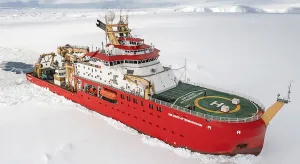
The 50-day cruise is scheduled to take place aboard the RRS Sir David Attenborough, departing from and returning to the Falkland Islands (UK) on 4 March and 22 April 2026, respectively (dates subject to change).
Priority areas
zooplankton
What is offered
During the cruise, the trainee will join the pelagic zooplankton team, working with pelagic nets, acoustic instrumentation, sample collection, basic taxonomic identification, and fisheries-relevant measurements (e.g., specimen length). In addition to team tasks, the trainee will undertake a mini-project, photographing Antarctic krill for inclusion in an AI training dataset for automated measurement and maturity staging. Guidance will be provided on sorting zooplankton samples and staging krill.
Application
Who can apply
This fellowship program is open to early career scientists, technicians, postgraduate students (PhD or MSc) and Post-doctoral Fellows involved in oceanographic work at centres in developing countries and countries with economies in transition. For a list of currently eligible countries, visit this page on the OECD website. Applicants will need to be physically capable and medically fit to work in Antarctic conditions and pass the BAS medical.
How to apply
Selected trainee from the 2025 NF-POGO Open Call for Shipboard Training
Review process
Representatives from POGO and BAS will review the applications. In their decision-making, the Selection Committee will consider the following points:
- Quality of the application;
- Curriculum of the applicant;
- Evidence that the training will lead to capacity-building with potential lasting impact on regional observations.
Terms
- The fellowship will provide the costs of a round-trip ticket between the home institute of the trainee and Cambridge; subsistence allowance for the stay in the UK depending on the particulars of the proposed training; a return flight to the Falkland Islands/Chile to join the ship; accommodation in the Falkland Islands/Chile (on joining/leaving ship); ship messing fee; seafaring medical and sea survival course.
- The trainee’s institute will bear all expenses incurred by the fellow in his/her own nation (domestic travel, visa costs, personal insurance etc.), and the host institute (BAS) will waive any bench fees that they may normally charge trainees.
- POGO assumes no responsibility for compensation in the event of sickness, accident, death or disability of a Fellowship holder, nor does it arrange for insurance of a trainee or reimburse premiums paid therefore. It is the responsibility of the trainee to arrange travel insurance to cover the time taken to travel to the ship and for the subsequent return home, as well as to ensure suitable insurance cover is provided by the parent institute for the duration of the cruise.
- The trainees are not considered agents or members of the staff of POGO, and shall not be entitled to any privileges, immunities, compensation or reimbursements, except as otherwise provided herein, nor are the trainees authorised to commit POGO to any expenditure or other obligation.
- The trainee and the supervisors at the parent and host institutes are required to provide a short progress report at the end of the training period, to evaluate the success of the fellowship programme.


