
General information
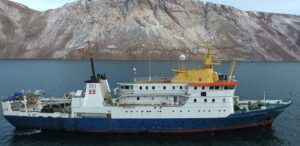
The National Institute of Aquatic Resources (DTU Aqua) is responsible for the Danish contribution to the International Bottom Trawl Survey (IBTS) and the Baltic International Trawl Survey (BITS), surveys conducted in the North and Baltic seas, respectively, with the objective of assessment of commercial fish stocks. IBTS and BITS campaigns are carried out periodically onboard the R/V Dana, a versatile multi-purpose research vessel managed by DTU Aqua. During the campaigns, deep-stratified demersal trawls for fish stocks are conducted during the day and are paired with other measurements (e.g., hydrographic, physico-chemical, biological) at night-time. The database provide essential data which that supports analysess of fish stocks in the North and Baltic Seas.
The 2025 DANA IBTS cruise will include bottom trawl fish monitoring and CTD casts at the fishing stations. No acoustics or plankton sampling is planned for this expedition.
The cruise is scheduled to depart on 25 August 2025 and return to Hirtshals, Denmark, on 14 September 2025. However, these dates are subject to change by a few days.
Priority areas
-
Fisheries
-
Fish Stock Assessment
-
Marine Biodiversity
-
Demersal Fish Ecology
-
Fisheries Oceanography
What is offered
NF-POGO will support one fellow who, under supervison of Chief Scientist Dr Kai Wieland (DTU-Aqua), will work alongside the scientific crew throughout the entire cruise. The fellow will participate in sampling activities involving up to 80 different fish and shellfish species from the North Sea and will learn how to derive quantitative data on abundance and biodiversity from trawl catches.
Application
Who can apply
This fellowship programme is open to early-career scientists, technicians, undergraduate or graduate students (preferably MSc or early PhD) involved in ocean and coastal fisheries work at ocean sciences-related institutions in developing countries and countries with economies in transition. Applicants must be citizens of developing countries or economies in transition, as defined by the Development Assistance Committee (DAC) of the OECD (see the list of eligible countries). Priority will be given to applicants with limited international experience.
How to apply
Applicants should complete and submit the online application (click the APPLY HERE button below), where they must upload a digital copy of their CV and a recommendation letter from their direct supervisor at their home institution. The recommendation letter must be written in English, on institutional letterhead, dated and signed by the supervisor.
Please note that the application form includes sections on the applicant’s background and training requirements, and capacity building intentions. In case of unstable internet connections, we recommend preparing this text in an offline document, then copy-pasting into the online form. If short-listed, the candidate may be asked to undergo an informal telephone/video conferencing interview.
Applications and recommendation letters must be written in English and letters submitted/uploaded in pdf format. Only applications that are complete in all respects will be considered for the Fellowship.
Deadline: The deadline for applications for this fellowship is Sunday 24 May 2025 23:59 (UTC+1). All applicants will be informed of the decision within two months of the deadline.
Review process
Representatives from POGO and DTU-Aqua will review the applications. In their decision-making, the Selection Committee will consider the following points:
- Quality of the application;
- Curriculum of the applicant;
- Relevance and Eligibility;
- Evidence that the training will lead to capacity-building with potential lasting impact on regional observations.
Terms
- The fellowship DOES cover a round-trip international airfare between the fellow’s home institute and the host institution; subsistence allowance for the duration of the fellow’s stay in the host country, based on the specific’s of the training; travel to and from departure port (if applicable); accommodation in the host country and departure port (if applicable); seafaring medical examination and sea survival training (if required).
- Ship messing fees and any institutional bench fees will be waived by the host institution.
- The fellowship DOES NOT cover expenses incurred within the fellow’s own country or during transit, including domestic travel, visa costs, meals in transit, personal or travel insurance.
- POGO does not provide insurance of any kind and assumes no responsibility for compensation in the event of sickness, accident, death, or disability. It is the fellow’s responsibility to arrange suitable travel insurance for the journey to and from the ship, as well as to ensure suitable insurance cover is provided by the parent institute for the duration of the cruise.
- Fellows are not considered agents or staff of POGO, and shall not be entitled to any privileges, immunities or compensation beyond what is explicitly provided and are not authorised to commit POGO to any obligations or expenditures.
- The fellow and the supervisors at the parent and host institutes are required to provide a short fellowship report at the end of the training period, to evaluate the success of the fellowship programme.
- By applying, you consent to the use of your personal data for communication regarding the training and for POGO’s internal administrative and reporting purposes. Access to your data is strictly limited to authorised personnel, in accordance with the the POGO Privacy Policy .


