
General information
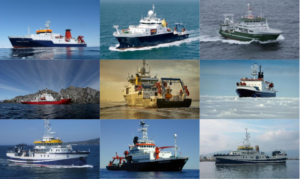
The Partnership for Observation of the Global Ocean (POGO) is planning* to offer shipboard fellowship opportunities on board research vessels throughout 2026 and early 2027. The programme is designed to promote training and capacity building, contributing to the development of a global ocean observation system.
Calls are normally announced at least six months before a cruise begins, allowing time for applications to be reviewed, shortlisted candidates to be interviewed, and for successful applicants to complete the necessary paperwork (e.g. visas, travel documents, and required medical or training certifications). However, berths are occasionally offered at shorter notice. To make the best use of these opportunities, the POGO Secretariat issues annual Open Calls for applications from early-career scientists, technicians, postgraduate students (PhD or MSc), and postdoctoral fellows who are nationals of, and engaged in ocean sciences research or studies at institutions, in developing countries and countries with economies in transition.
The application form asks candidates to outline their specific at-sea training interests, including geographical areas and research or training topics, as well as their general availability during 2026 and the first semester of 2027. Candidates are asked to note any known commitments that may affect their availability; however, this information is indicative and will be confirmed with shortlisted candidates as specific opportunities arise.
The Secretariat will maintain a database of all qualified and interested candidates and will create shortlists based on suitability for the project in question.
* subject to confirmation of funding
Please read all instructions on this page carefully before applying.
Priority areas
Dependent on each particular fellowship opportunity. Suitable candidates will be contacted with further details.
What is offered
Dependent on each particular fellowship opportunity.
Besides participating in the cruise, the selected candidate may have the opportunity to visit the host institution for up to one month prior to the start of the cruise to participate in cruise preparation and planning and/or up to one month back at the host institution after the cruise for further training in sample and data analysis and interpretation.
Application
Who can apply
This programme is exclusively open to candidates who are nationals of, and engaged in ocean sciences research or studies at institutions in, developing countries and countries with economies in transition, as defined by the Development Assistance Committee (DAC) of the OECD (see the list of eligible countries). Applicants who do not meet these criteria will not be considered.
Priority will be given to candidates who have had limited access to similar training opportunities, are at an early career stage, have limited international training experience, and have not recently received a substantial POGO fellowship.
How to apply
Applicants should complete and submit the online application form (click the APPLY HERE button below).
The application form includes sections on the applicant’s background and motivation, capacity development intentions, and training needs. If you have an unstable internet connection, we recommend preparing your responses in an offline document and copying and pasting them into the form before submitting.
As part of the application, candidates must upload pdf copies of their CV and a recommendation letter from their direct supervisor at their home institution.
- The CV should list relevant experience, training courses, events, and publications, including dates, authors, locations, and any other pertinent details.
- The recommendation letter must be written in English, on institutional letterhead, dated within the last 12 months, and signed by the supervisor.
All documents and the application form must be completed in English. Only complete applications will be considered for the Fellowship.
This is an ongoing call and applications will be reviewed as they are received. Candidates will be contacted if they are considered suitable for shipboard trainings as they become available.
Review process
When an opportunity arises, representatives from POGO and the host institution will review applications that match the cruise objectives. In their decision-making, the Selection Committee will consider the following:
- Quality of the application;
- Experience and qualifications of the applicant;
- Evidence that the training will lead to capacity building with potential lasting impact on regional or national ocean observations;
- Relevance and eligibility of the applicant, including alignment with the cruise objectives and training programme.
Applications will only be considered if:
- They are written entirely in English;
- The applicant fits the eligible profile (early-career scientist, technician, postgraduate student, or postdoctoral fellow who is a national of, and engaged in oceanographic work at, a centre in an eligible country);
- The applicant has a background in ocean science;
- The recommendation letter is specific to shipboard training, written on institutional letterhead, dated within the last 12 months, and signed by the supervisor.
Terms
1 – The fellowship covers the following, depending on the specific nature of the training:
- Round-trip international airfare between the fellow’s home institution and the host institution;
- Subsistence allowance for the duration of the fellow’s stay in the host country;
- Travel to and from the departure port (if applicable);
- Accommodation in the host country and at the departure port (if applicable);
- Seafaring medical examination and sea survival training (if required).
2 – The fellowship does not cover expenses incurred within the fellow’s home country or during transit, including domestic travel, visa-related costs, meals in transit, or personal and travel insurance.
3 – Ship messing (board) fees and any institutional bench fees, which are usually waived or covered by the host institution.
4 – It is the fellow’s responsibility to arrange suitable travel insurance for the journey to and from the ship. If the host institution does not provide insurance coverage for the duration of the cruise, the fellow must arrange this independently.
5 – POGO does not provide insurance of any kind and assumes no responsibility for compensation in the event of sickness, accident, death, or disability.
6 – Fellows are not considered agents or staff of POGO and are not entitled to any privileges, immunities, or compensation beyond what is explicitly provided. Fellows are not authorised to commit POGO to any obligations or expenditures.
7 – The fellow and the supervisors at the home and host institutions are required to submit a short fellowship report at the end of the training period to evaluate the success of the programme.
8 – By applying, you consent to the use of your personal data for communication regarding the training and for POGO’s internal administrative purposes. Access to your data is strictly limited to authorised personnel, in accordance with POGO’s Privacy Policy.


